
If you manage a business space in Toronto or the GTA, your floors take a beating every day. Commercial vinyl flooring is a common choice for offices, retail stores, restaurants and more because it delivers durability, water resistance, design flexibility and easy maintenance, all while standing up to high-traffic areas. But vinyl flooring isn’t one product. You’ll typically choose between Luxury Vinyl Tile (LVT), Luxury Vinyl Plank (LVP) and Sheet Vinyl. The best choice depends on your foot traffic, moisture exposure, desired appearance, maintenance routine and budget. Let’s break down each option so you can choose with confidence.
What Is Commercial Vinyl Flooring?
Commercial vinyl flooring is built differently than standard residential vinyl. It uses a thicker wear layer above the design layer to protect against scuffs, scratches, and heavy foot traffic, and commercial-grade products are generally rated higher than residential ones. This extra protection means commercial-grade vinyl holds up longer in offices, retail stores, restaurants, and other high-traffic environments than lighter-duty products. It also resists moisture better, which matters in spaces prone to spills, cleaning and humidity. Because commercial spaces see stricter performance demands, installation requires careful subfloor preparation and product selection suited to how the space is used.
Main Types of Commercial Vinyl Flooring
Commercial vinyl flooring comes in three main formats, each serving a purpose.

Luxury Vinyl Tile (LVT)
Luxury vinyl tile comes in individual pieces that mimic natural stone or ceramic tile. Because it installs piece by piece, you can replace a damaged tile without redoing the floor. As a category of luxury vinyl flooring, LVT works well in offices, retail stores, hospitality settings and other commercial spaces where you want a polished, tile-like look with easier upkeep.

Sheet Vinyl Flooring
Vinyl sheet flooring installs in large, continuous rolls, which means far fewer seams. Fewer seams mean stronger moisture resistance and easier cleaning, making sheet vinyl flooring a common choice for healthcare facilities, schools and commercial kitchens where hygiene matters most.
Luxury Vinyl Plank (LVP)
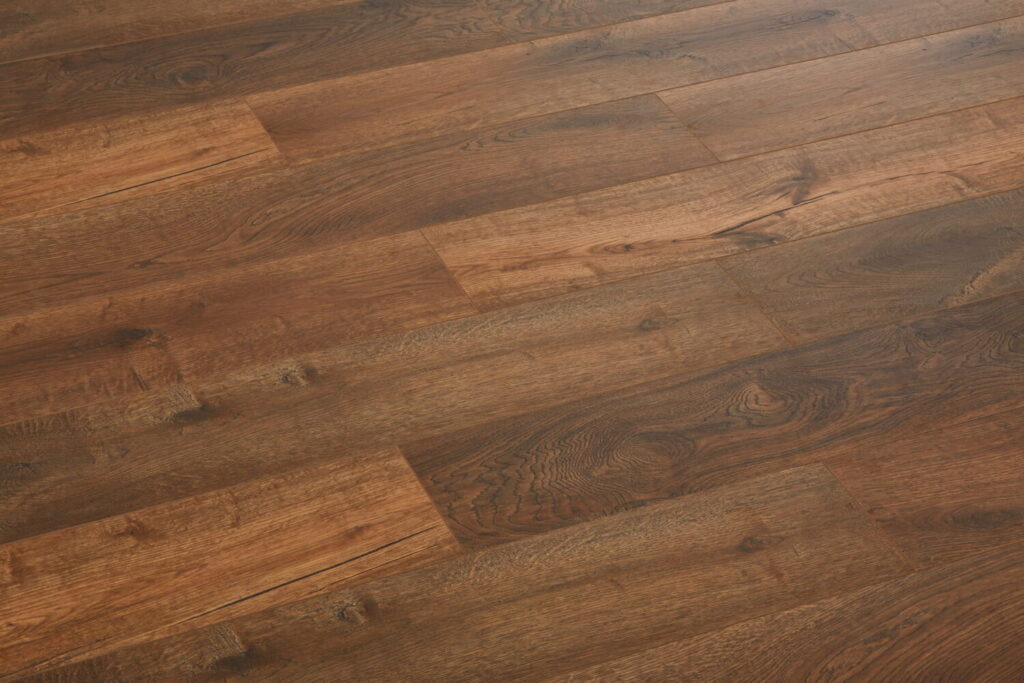
Luxury vinyl plank flooring comes in long, narrow planks that closely mimic hardwood. If you want a wood-look floor without the upkeep of real hardwood, commercial vinyl plank flooring gives you a strong design option. It performs well in offices, restaurants and hospitality environments where appearance matters as much as durability.
In commercial applications, glue-down vinyl plank is the standard choice over the click-lock systems common in residential work, since it holds up better under constant high-traffic use.
LVT vs LVP vs Sheet Vinyl: Quick Comparison
Each commercial vinyl format has strengths that suit different businesses. Before choosing, it helps to see how LVT, LVP and sheet vinyl stack up side by side on the factors that matter most: appearance, water resistance, seams, repairability, ideal use and maintenance. Here’s a quick comparison to guide your decision.
| Feature | LVT | LVP | Sheet Vinyl |
|---|---|---|---|
| Appearance | Tile/stone | Wood | Continuous surface |
| Water resistance | High | High | Very high |
| Seam count | Moderate | Moderate | Low |
| Repairability | Easy | Easy | More difficult |
| Best for | Retail, offices | Offices, hospitality | Healthcare, kitchens |
| Maintenance | Easy | Easy | Very easy |
As you can see, all three options perform well for commercial use, but they shine in different situations. If your space handles constant moisture, like a restaurant kitchen or medical facility, sheet vinyl’s minimal seams give you an edge. If you want a tile-inspired look with the ability to swap out individual damaged pieces, LVT is hard to beat. And if a wood-look floor fits your brand better, LVP delivers that warmth without sacrificing commercial-grade performance. Talk with your flooring contractor about your traffic patterns and budget before committing to one format.
Which Commercial Vinyl Flooring Is Best for Different Businesses?
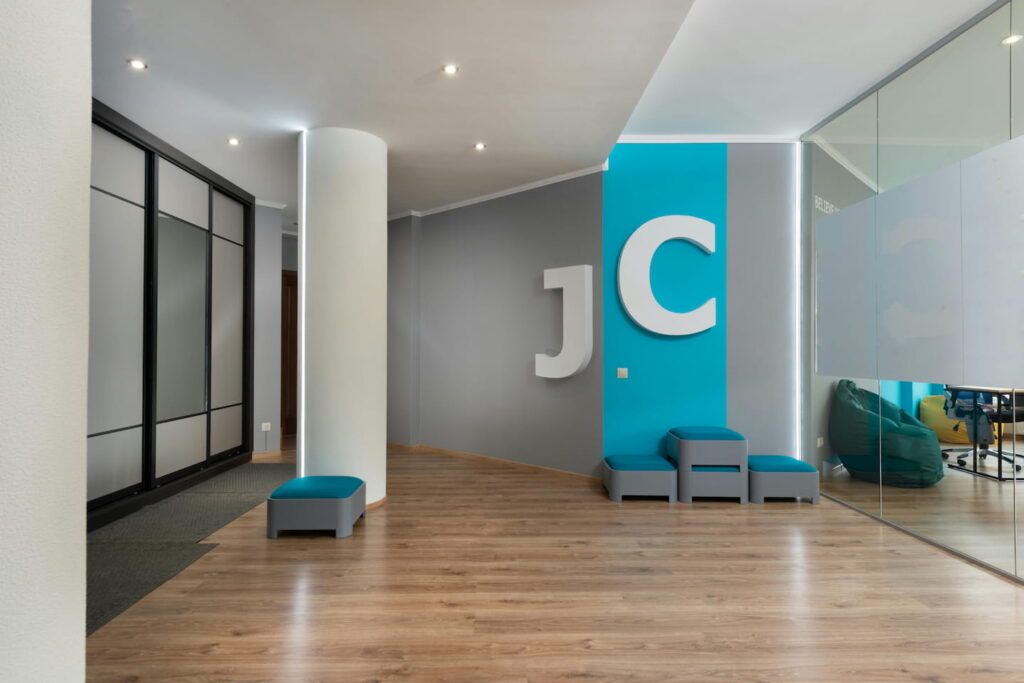
Your office sets the tone for clients and employees. LVT offers a polished look with tiles you can replace as needed, while LVP offers warmth if you prefer wood-look flooring. Explore our Office Flooring options.

You want retail flooring that looks sharp and withstands constant customer traffic. LVT and LVP both deliver strong visual appeal and commercial-grade wear layers that stay fresh in high-traffic aisles. Visit our Retail Flooring page for storefront options.

In a restaurant, you deal with spills, grease and heavy cleaning daily. Sheet vinyl’s minimal seams keep kitchens sanitary, while LVT and LVP hold up well in dining areas with lighter spill exposure. Our Restaurant Flooring page covers options for kitchens and dining rooms.

As a hotel, you need flooring that looks upscale, muffles noise and holds up to constant guest turnover. LVP’s wood-look appearance suits lobbies and guest rooms, while LVT’s replaceable tiles add flexibility in high-traffic common areas. Browse our Hotel Flooring page for hospitality solutions.

If you run a clinic or a school, easy cleaning, moisture resistance and hygiene come first. Sheet vinyl is often the right call, thanks to its minimal seams and continuous surface. Visit our commercial flooring page to discuss the right solution.
What Should You Consider When Choosing Commercial Vinyl Flooring?
How Long Does Commercial Vinyl Flooring Last?
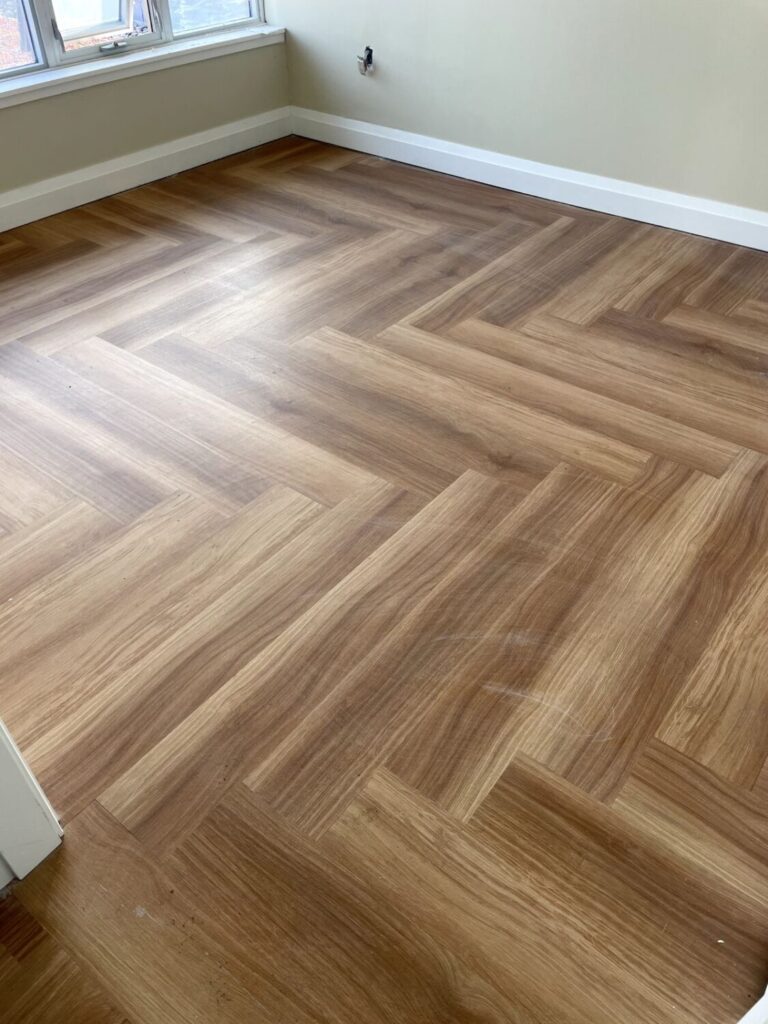
Commercial vinyl flooring’s lifespan depends on several factors, including product quality, wear layer thickness, traffic volume, maintenance routine, installation quality and subfloor preparation. A well-installed, well-maintained commercial vinyl floor in a moderate-traffic space will outlast one installed poorly in a high-traffic entrance, sometimes by many years. Regular cleaning and prompt repairs also extend performance over time. We can walk you through expected performance and warranty details for the specific products you’re considering, since these vary by manufacturer and product line.
How Much Does Commercial Vinyl Flooring Cost?
No single flooring cost per square foot applies to every commercial project; costs vary based on several factors. Material and installation typically range from approximately $2 to $10+ per square foot, depending on product quality and project scope. However, the biggest cost variable is often subfloor preparation itself. Concrete that requires grinding, skim coating, patching, or self-leveling can add significant expense depending on the existing condition. Your total investment depends on the vinyl type, square footage, material grade, and site conditions, on top of any subfloor or removal work. Because every commercial space is different, the most accurate way to understand your costs is to get a detailed estimate based on your specific project. Request a Commercial Flooring Estimate, and we’ll walk you through the numbers.
Which Type of Commercial Vinyl Flooring Should You Choose?

Here’s a quick way to match the right commercial vinyl format to your space and how it gets used:
- Choose LVT when appearance and tile-style flexibility matter most to your space.
- Choose LVP when you want a commercial wood-look floor that still performs under heavy daily use.
- Choose sheet vinyl when moisture resistance, hygiene and minimal seams are your top priorities.
The right specification ultimately depends on your space, traffic conditions, budget, and how your business uses the floor day-to-day. No single format works for every business. A quick consultation can help you match the right product to your specific needs and goals.
Commercial Vinyl Flooring Installation in Toronto & the GTA
Zelta Floor & Design handles commercial vinyl flooring installation from subfloor preparation through product selection and final installation across Toronto and the GTA. Our team manages every step so you get a consistent result from start to finish. Visit our Commercial Flooring Toronto page to see our full range of commercial services.
Book a Free Commercial Flooring Consultation to get started.