
Yes, red oak stairs can be made to look much closer to white oak. An exact match is rarely possible, though, because red oak has pink or reddish undertones and a more open, prominent grain, while white oak is usually beige to brown with a tighter-looking grain.
The best result usually comes from sanding the stairs back to bare wood, testing several colour-corrected stain samples, and finishing the chosen sample with the same clear coat that will be used on the staircase. Depending on the starting colour and the floor you want to match, the process may include a neutral or greige stain, a small green-toned colour correction, a custom stain mix, or professional wood bleaching.
This guide explains which methods work, what homeowners should expect, and when it makes sense to bring in a stair refinishing contractor.
Red Oak vs. White Oak
Red oak and white oak can be brought into the same colour family, but stain cannot change the species or erase the grain. The goal is usually a coordinated appearance, not two surfaces that look identical at close range.
| Feature | Red Oak | White Oak |
|---|---|---|
| Undertone | Pink/red/warm | Beige/brown/neutral |
| Grain | More open and pronounced | Tighter and more subtle |
| Stain absorption | Absorbs deeply and can emphasize grain | Generally more even-looking |
| Natural appearance | Warmer/rustic | Cleaner/more contemporary |
| Exact colour match possible? | No | — |
Lighting also matters. A sample that looks neutral beside a window in the morning may look pink or grey under warm bulbs at night. That is why stain decisions should be made in the home, beside the actual floor, rather than from a small colour card alone.

Red Oak
Red oak is a warm wood tone with hues of red and pink. It has a large and prominent grain pattern, which gives it a rustic appearance.
The open pores also increase the wood’s absorption of stains. In contrast, clear-coating red oak can result in a courser finish. Multiple clear-coats are typically necessary to achieve a smooth textured finish.

White Oak
White oak is a cool-toned wood with neutral hues of light browns and beiges. The grain pattern is tighter and less pronounced than red oak, giving it a refined look.
White oak wood has closed pores, which impacts its stain absorption and varies the appearance of the finish. However, this can also lead to a smoother finish when you apply a top coat.
Best Methods for Making Red Oak Look Like White Oak
There is no single stain colour that works in every home. The right method depends on the existing finish, the red oak’s natural colour, the white oak reference floor, and how light you want the final staircase to be.
1. Sand, Stain, and Refinish the Stairs
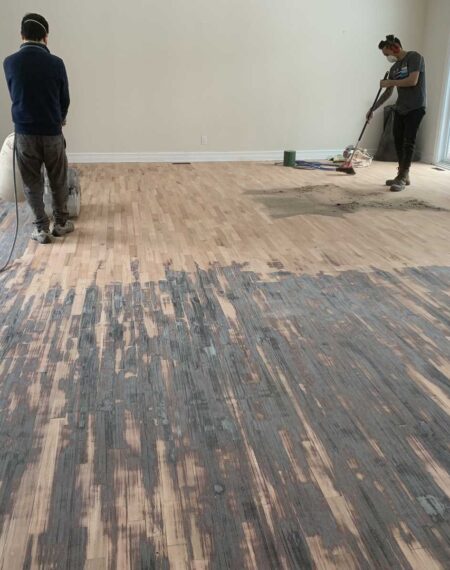
For many staircases, full stair refinishing and staircase renovation is the most practical option. The old coating is removed, the bare wood is prepared evenly, stain samples are tested, and a protective finish is applied.
This method works well when the existing stain is darker than the desired colour or when the stairs have worn, scratched, or uneven areas. It also gives the contractor a clean surface for testing colour correction.
2. Neutralize Red Undertones With a Controlled Green Cast
Green sits opposite red on the colour wheel, so a very small green or olive component can reduce pink and salmon tones in red oak. This does not mean applying an obviously green stain. The correction is normally subtle and may be part of a custom stain mix, toner, or layered sample system.
Too much green can leave the wood looking muddy or grey. Test the complete finish system first, because the clear coat can make the colour warmer.
3. Use a Custom Stain Mix
A custom mix can combine beige, muted brown, grey, and a controlled green component to move red oak closer to the white oak floor. In some homes, the stairs and floor need different stain formulas even when the finished colours are meant to coordinate.
Record every ratio and application detail used on the approved sample. A small difference in colour concentration, dwell time, wiping, or sanding can change the result across multiple stair treads.
4. Bleach the Wood Before Staining
Wood bleaching can reduce the natural colour in red oak before a pale stain or finish is applied. This may help when the target is a light, natural white oak look that stain alone cannot reach.
Bleaching is not the same as cleaning the wood with household bleach. Professional wood-bleaching systems can be caustic, may raise the grain, and can react with metal fasteners, surrounding finishes, or later coatings if the surface is not treated correctly. Product instructions, ventilation, protective equipment, neutralization requirements, drying time, and finish compatibility all matter. This is one of the strongest reasons to hire a professional.
5. Refinish Connected Wood Surfaces as One Colour Plan
Sometimes the stairs are not the only surface that needs attention. If the white oak floor is also due for floor refinishing, planning both finishes together can create a more natural transition. The formulas do not have to be identical. They need to look balanced beside each other in the home’s lighting.
If the existing staircase cannot be sanded safely, is badly damaged, or has components that do not suit the new design, staircase installation or recapping may be more sensible than another refinishing cycle.
Why It’s Difficult to Match Red Oak to White Oak Floors
There are various reasons matching red oak to white oak flooring can be challenging. For one, stain on red oak absorbs into the large pores of the wood. This lessens the effect of the stain and causes the finish to appear warmer, even if you’re using a cool-toned stain. When you stain white oak, the stain appears more vividly. Additionally, the lighting conditions in the space, such as whether you have natural or artificial lighting, can impact how each of the woods look.

How to Blend and Stain Stairs to Match Floor
- Despite the natural variations in wood colour and grain patterns, there are various ways to blend red oak stairs with white oak flooring to establish a cohesive aesthetic. Here are a few expert tips and techniques you can use to blend red oak and white oak:
- Add mouldings or floor runners to ease the transition between the two woods.
- Be consistent when applying finishes to both types of wood across multiple spaces.
- Mix a custom stain using varying percentages to create the ideal blend.
- Stain each wood differently, such as using more or fewer coats and two separate stains.
- Pay close attention to the colour of your walls and furniture as it can affect the appearance of the woods.
- Use a green stain to neutralize the red hues in your red oak stairs.
Can You Bleach Red Oak to Make It Look Like White Oak?
Wood-bleaching products require careful handling, ventilation, protective equipment, and strict product directions. They may also affect metal, nearby finishes, wood fibres, and later coatings. This is generally professional work, especially on an occupied home’s main staircase.
Stain Colours That Can Work on Red Oak
The following colour directions are useful starting points for sample testing. The finished result will vary with the wood, sanding, stain system, and top coat.
Neutral and Beige Stains
Soft beige and muted tan stains can pull red oak toward the natural warmth associated with white oak. Look for formulas that avoid strong amber, orange, or red components.
Greige Stains
Greige combines grey and beige. On red oak, a balanced greige may calm pink tones without making the stairs look flat or overly grey. This direction often works well beside neutral white oak floors.
Whitewashed or Pale Natural Finishes
A whitewashed or lightly pigmented finish can soften the red cast while keeping the grain visible. Pale finishes are less forgiving, however. Sanding marks, edge differences, glue residue, filler, and natural colour variation can show clearly.
Slightly Green-Toned Mixes
A trace of green can correct red, but the sample should still read as beige, light brown, or greige when it is finished. If the green is easy to identify, the mix has probably gone too far.
Medium Neutral Browns
Moving slightly darker is often easier than creating a very pale white oak look. A medium neutral brown can bring red oak and white oak into the same family while reducing the visual effect of their different undertones.
How to Stain Red Oak Stairs to Match White Oak Floors
The exact product instructions take priority, but the following process shows what a careful refinishing job usually involves:
- Inspect the staircase and confirm the wood. Check the treads, nosing, landings, handrail, and posts. Confirm which parts are solid wood, veneer, previously replaced material, or painted components. Thin veneer and heavily sanded treads may not have enough usable material for aggressive sanding.
- Choose a realistic target. Decide whether the goal is a pale natural look, beige, greige, or medium neutral brown. Compare the red oak stairs with the white oak floor in daylight and artificial light. A coordinated match is more realistic than identical grain and colour.
- Remove the old finish and sand evenly. A typical progression may begin around 40- or 60-grit where an old coating must be removed, move to 80-grit, and finish around 100- or 120-grit. The correct starting and final grits depend on the coating, equipment, wood condition, and stain manufacturer’s directions. Each grit should remove the scratches left by the previous one. Corners, nosing, edges, and flat areas must be prepared consistently or they may take stain differently.
- Remove all sanding dust. Vacuum the treads, risers, joints, walls, and nearby floor. Use the cleaning method approved for the finish system. Dust left in corners or on the surface can affect both colour and the smoothness of the clear coat.
- Make several test samples. Whenever possible, test on spare red oak prepared with the same sanding sequence. A discreet area of the actual staircase may also be useful. Compare neutral beige, greige, whitewashed, and colour-corrected mixes. Label each formula, ratio, number of coats, application time, and wiping method.
- View samples beside the floor. Place the finished samples against the white oak in morning light, afternoon light, and at night. Test them under the bulbs normally used in the home. Finish each sample with the intended sealer or top coat, since a clear finish can deepen or warm the colour.
- Apply the approved stain consistently. Work in controlled sections and follow the stain maker’s application, wiping, ventilation, and drying directions. Maintain the same timing and technique across every tread. Do not judge the colour while the stain is still wet.
- Allow the stain to dry fully. Drying time changes with the product, temperature, humidity, airflow, and stain thickness. Applying a clear coat too soon can cause adhesion, curing, or colour problems. Follow the stain and finish manufacturers’ compatibility and recoat instructions.
- Seal and protect the stairs. Use a floor- or stair-rated finish that is compatible with the stain. Water-based polyurethane is often chosen when limiting amber colour is important, while some oil-based finishes add warmth. Apply the specified number of coats and follow the required abrasion, cleaning, drying, and recoat steps between coats.
- Respect the cure time. A finish may feel dry before it is ready for normal foot traffic, rugs, pets, or cleaning. Follow the manufacturer’s cure schedule and protect the route through the home during the work.
Professional Refinishing vs. DIY
Some homeowners can handle light preparation and sample testing, but matching red oak stairs to white oak floors is more demanding than applying a standard dark stain.
DIY May Be Reasonable When
- The stairs are solid red oak with a straightforward existing finish.
- You are using a conventional stain and compatible clear coat.
- You have spare red oak for testing.
- You can keep sanding consistent across the treads, edges, and nosing.
- You can close the staircase for the required drying and curing time.
Hire a Professional When
- The goal is a very light natural white oak appearance.
- Bleach, lye, peroxide, reactive treatments, or layered colour correction may be required.
- The staircase includes veneer, repairs, mixed wood species, glue residue, or deep damage.
- The stairs must match newly installed flooring across a prominent transition.
- Railings, posts, stringers, and landings also need refinishing.
- The staircase is the home’s main route and downtime must be carefully managed.
Professionals can prepare multiple samples, control the sanding and application process, and test the full stain-and-finish system before it is used across the staircase. They can also advise whether refinishing, recapping, or a larger staircase renovation is the better fit.
Red Oak Stair Refinishing Project
The Etobicoke Stairs Staining Project is a strong example of how existing red oak stairs can be refinished to achieve a lighter, more neutral look that blends better with white oak-inspired interiors. The staircase was sanded and prepared before a new stain was applied to reduce the natural red and pink undertones of the wood. Careful colour selection helped create a softer finish while preserving the character and grain of the red oak.
This type of refinishing is especially useful when homeowners install lighter hardwood flooring but want to keep their existing staircase. Rather than replacing the stairs entirely, staining and refinishing can help create a more consistent transition between the staircase and surrounding floors. The finished result shows how professional stain matching can modernize red oak stairs while maintaining the durability and natural appearance of the wood.


Professional Staircase Refinishing in Toronto
While there are many techniques and tips above that can help you match your red oak stairs to your white oak flooring, it’s important to set realistic expectations. Recreating the exact tone of white oak on red oak may not be possible. However, stains are an excellent way to reduce the brightness of red oak, allowing it to blend better with white oak. Make sure to maintain your stairs and flooring regularly after staining to ensure long-lasting beauty.
Reach out to Zelta Floor & Design for expert advice on how to make red oak look like white oak.